

Endeavour's Pact to power AI data centres with hydrogen
Tue, 17th Mar 2026
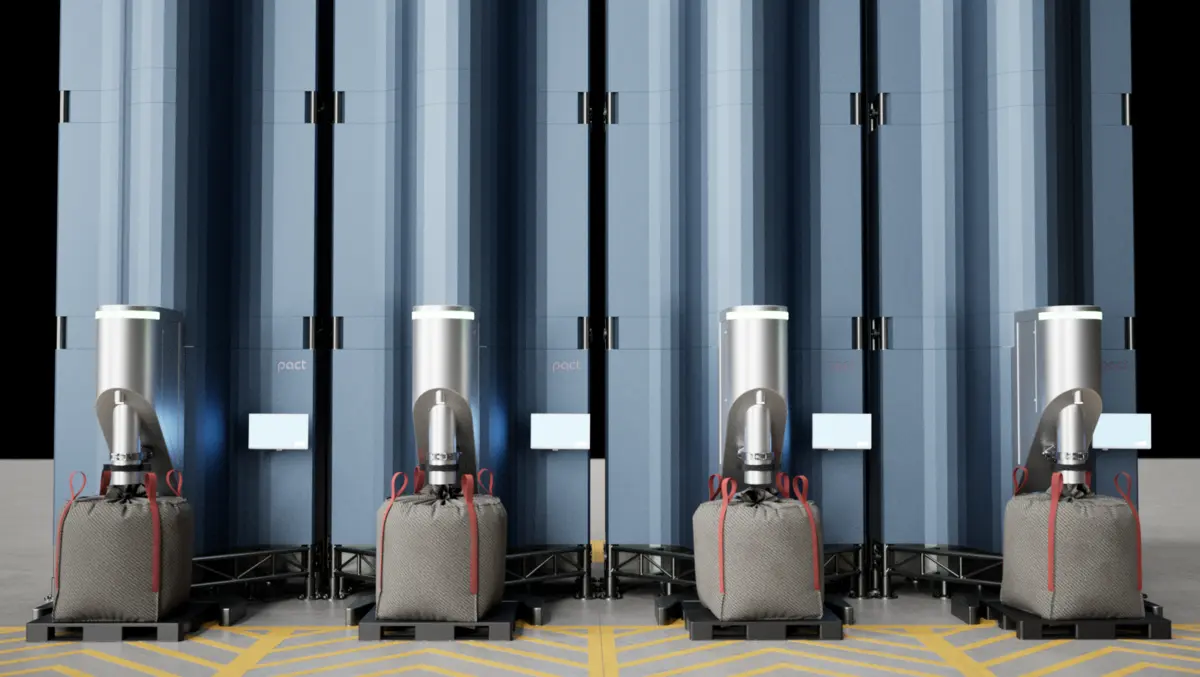
Endeavour has introduced Pact, a methane pyrolysis system that produces hydrogen fuel and solid carbon, as it targets round-the-clock, low-carbon power supply for large AI data centre campuses.
It positions Pact as a source of continuous, dispatchable energy suited to hyperscale development, where operators are seeking firm generation to meet rapidly rising demand from AI workloads. Endeavour also says producing solid carbon alongside hydrogen could cut emissions compared with conventional hydrogen production and gas-fired power.
Methane cracking
Pact uses low-temperature methane pyrolysis, also known as methane cracking. The process separates hydrogen from methane feedstocks and leaves carbon behind in solid form rather than as carbon dioxide.
Pact can run on natural gas and biomethane, according to Endeavour. It describes the system as continuous-flow and closed-loop, using a catalytic reactor to split methane and convert the remaining carbon into solid graphite.
Hydrogen from methane pyrolysis has drawn interest as a potential complement to electrolytic hydrogen, particularly in regions where renewable electricity is constrained or grid connections are limited. Today, most hydrogen is produced from fossil fuels, mainly via steam methane reforming, which emits carbon dioxide unless paired with carbon capture.
Endeavour argues that Pact's hydrogen has a lower direct lifecycle greenhouse gas footprint than electrolysis-based "green" hydrogen. That claim depends on the feedstock used, upstream methane leakage, and the energy required to run the reactor.
Data centre fit
Endeavour frames Pact as a fuel-supply system that can sit alongside on-site power generation. It says the unit can be close-coupled with generators for "just-in-time" hydrogen production, reducing reliance on hydrogen storage and transport.
Those logistics are a major practical constraint for hydrogen in power applications. Hydrogen has low volumetric energy density and often requires compression, liquefaction, or chemical conversion for shipping and storage.
The company says Pact has a small footprint and modular design, and can support generator systems from 5 MW to more than 1,000 MW-spanning small industrial sites to large campus developments.
Endeavour also cited its TurboCell power system as a generation option paired with Pact. It did not provide deployment timelines, operating efficiency figures, hydrogen output rates, or an independently verified cost model in the announcement.
Graphite output
A key feature of methane pyrolysis systems is how they handle carbon. Endeavour says Pact converts carbon into solid graphite that can be sold into industrial markets, rather than stored underground or released as carbon dioxide.
Graphite demand has been rising due to battery supply chains, industrial uses, and refractory applications, though specifications vary widely by end market. Endeavour says it can produce "high-quality graphite" and pointed to a broader pipeline of graphitic and carbon nanomaterials for applications including semiconductors, power cables, construction materials, and carbon dioxide capture.
The company says the system could be net carbon-negative if functionalised carbon displaces energy-intensive graphite imports. That outcome would depend on factors including the carbon product's lifecycle emissions, the avoided emissions from displaced supply, and methane leakage across the gas value chain.
Testing partner
Endeavour says it tested Pact with manufacturing partner EBNER at EBNER's US headquarters in Wadsworth, Ohio. EBNER, known for industrial heat treatment equipment, said it sees Pact as relevant to hydrogen production for industrial uses.
Jakob Carnemark, CEO and founder of Endeavour, said the market lacks low-carbon options that can be deployed quickly at scale for AI and industrial demand.
"There have been few low-carbon options that can be deployed quickly at the scale and cost needed for AI campuses and heavy industry. The Pact system fills that gap." said Jakob Carnemark, CEO and founder of Endeavour.
Herbert Gabriel, managing director of EBNER, called the work a milestone and contrasted it with incumbent production routes.
"This is an important milestone for the hydrogen industry," said Herbert Gabriel, managing director of EBNER. "The Pact system dramatically reduces the environmental footprint of conventional fossil-based hydrogen and overcomes the scalability challenges of electrolysis-based systems."
Endeavour also highlighted its intellectual property around carbon materials derived from the process.
"Instead of storing carbon or releasing it into the atmosphere, Pact is creating the foundation for a carbon materials platform backed by a growing patent portfolio of clean chemical synthesis and functionalization technologies," said Juzer Jangbarwala.
Commercial route
Endeavour says Pact is available exclusively through Edged Infrastructure, its data centre platform and delivery arm. The approach appears focused on integrated campus projects where energy systems, cooling, and build delivery sit under one umbrella.
Near-term uptake will likely hinge on proof of sustained operation, economics under different gas and power price conditions, and the ability to secure buyers for solid carbon output at scale. Carnemark reiterated that the company sees a gap in low-carbon supply for large AI campuses and heavy industry, and views Pact as designed to meet those requirements.