

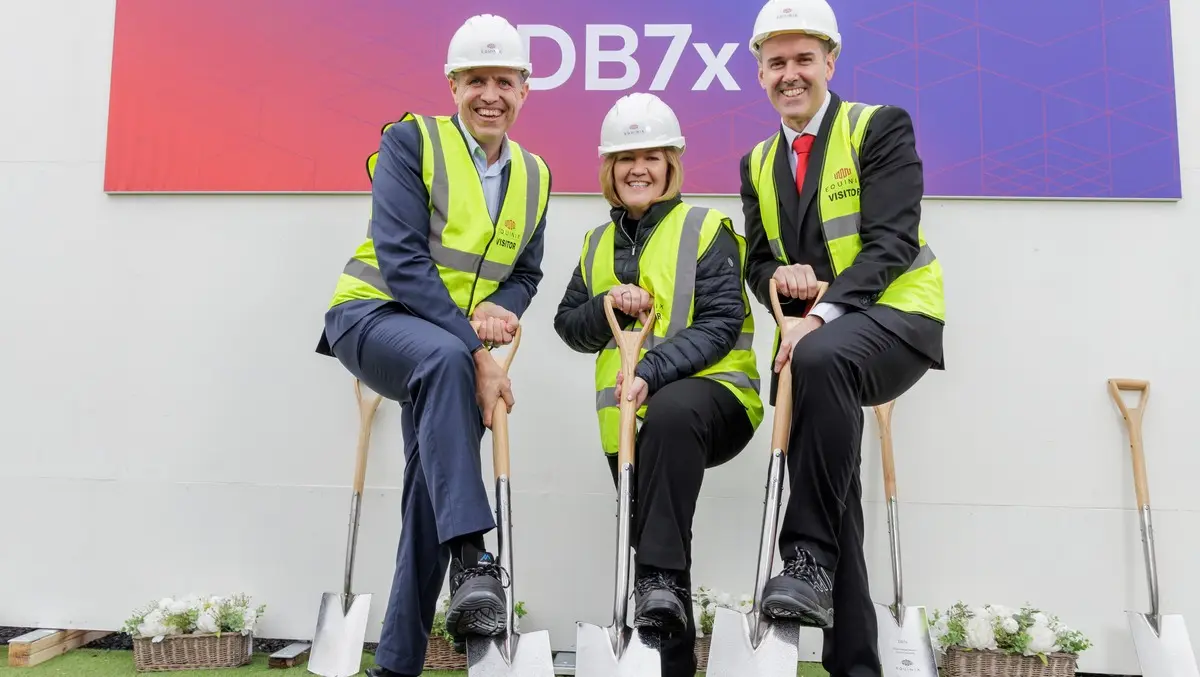

Equinix has begun construction on a new data centre in Dublin in a USD $92 million investment in the Irish market.
The facility, known as DB7x, is being built in Blanchardstown beside two existing Equinix sites. It will cover 1,322 square metres and use power already allocated to the campus, avoiding any need for additional grid capacity.
The investment includes USD $78 million for the main facility and a further USD $14 million for a retail International Business Exchange, or IBX, buildout. The site is intended to add colocation capacity in Dublin and sit close to Equinix's current operations to improve connectivity between locations.
Dublin remains a key market for data centre operators because it serves as a hub for international technology groups, cloud services and multinationals with European operations. Ireland has also attracted significant foreign direct investment, making digital infrastructure a strategic issue for business and government.
Retail capacity at DB7x is expected to become available from early 2028. The new site is intended to support enterprises operating in Ireland as well as those connecting to customers in other markets.
Grid issue
The project comes as power supply and grid access have become central issues for the Irish data centre sector. New developments have faced greater scrutiny because of concerns over electricity demand, network constraints and the broader effect of data centre expansion on national energy policy.
Against that backdrop, Equinix said the new building would be "100% flexible to support the national grid" and would not require extra grid power because it is being constructed on an existing site. That detail is likely to attract attention in a market where available power has become one of the main barriers to further expansion.
Equinix says it already serves around 200 foreign direct investment corporations in Ireland. The latest project extends a local presence that has now reached a decade and adds to a cluster of facilities in west Dublin that has become one of the country's most established data centre locations.
Local expansion
The decision to build next to two existing Dublin sites reflects a broader industry pattern of expanding on established campuses rather than seeking entirely new locations. Existing land, planning status, power allocations and network links can make such sites easier to develop than greenfield alternatives.
For customers, proximity between facilities can also matter because it allows lower-latency links between systems and easier access to existing ecosystems of carriers, cloud providers and corporate users. Equinix said DB7x's location near its current data centres was designed to improve connectivity.
"This is an exciting development for Equinix's operations in Ireland, as we celebrate 10 years of being in Ireland, investing in its infrastructure and economy. This announcement strongly supports the Government's recently published Digital and AI Strategy, which outlines a path for keeping Ireland at the forefront of global digital innovation. It also reaffirms our commitment to Ireland and its importance to businesses worldwide," said Peter Lantry, Managing Director of Equinix Ireland.
Equinix linked the expansion to demand from domestic and international businesses seeking local infrastructure and connections to wider networks. Ireland has positioned itself as a base for technology, financial services and multinational operations, all of which depend heavily on resilient data centre capacity.
"This is positive news for the Irish economy. By expanding colocation capacity in Dublin, we will enable domestic and international enterprises to scale, innovate, and connect across Equinix's global digital infrastructure platform with ease," Lantry added.
The new facility is one of the more notable recent data centre investments announced in Ireland, not only because of its size but also because it is being developed within existing power limits. In a market where electricity access has become as important as land or fibre, that may prove as significant as the USD $92 million being committed to the project.